
Arbor Max Tree Service provides commercial stump grinding and full site restoration throughout Berks County. Property managers, HOA boards, municipalities, schools, general contractors, and utility agencies call on us once a removal is finished and a property still has a stump, exposed roots, or disturbed ground standing between the site and its next use.
A stump left in place is more than an eyesore. It is a tripping hazard on a walkway, a mower and landscaping obstacle, a spot where new turf will not take, and in some cases a liability question an insurer or a board will eventually ask about. For a commercial property, that stump can also sit directly in the way of a paving project, a new planting bed, a playground expansion, or a parking lot redesign. We grind stumps flush below grade and restore the surrounding site so the ground is ready for whatever comes next, whether that is sod, mulch, new plantings, or pavement.
Commercial Stump Grinding Services in Berks County
Our equipment handles stumps of any size, from a single tree removed behind a retail building to a full row cleared ahead of a construction project. Grinding removes the stump and the visible surface roots below grade, and we can grind deeper on request when a site is headed for new construction, footing work, or turf that needs an even surface. We follow the operating practices outlined by the Tree Care Industry Association for stump grinder operations, which cover machine setup, ground protection, and safe clearance around hardscape, irrigation, and underground utilities so the work is done without damaging what is already on the property.
Once grinding is complete, restoration is part of the job, not an afterthought. We backfill the void with soil, grade the area level with the surrounding ground, and leave it ready for seed, sod, mulch, or paving depending on what the property needs next. For sites with several stumps spread across a large area, such as a completed land clearing project or a storm cleanup that removed multiple trees, we can restore the whole area in one visit instead of leaving a property with a patchwork of holes to deal with individually.
Ground Up, Not Left Half Finished
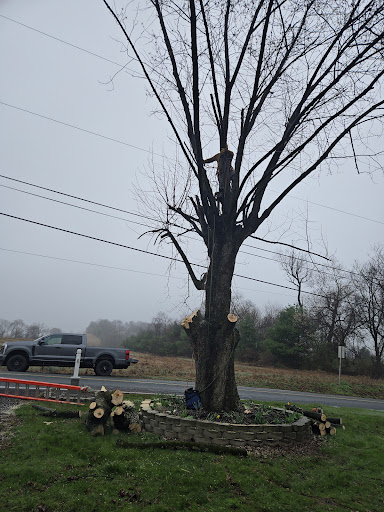
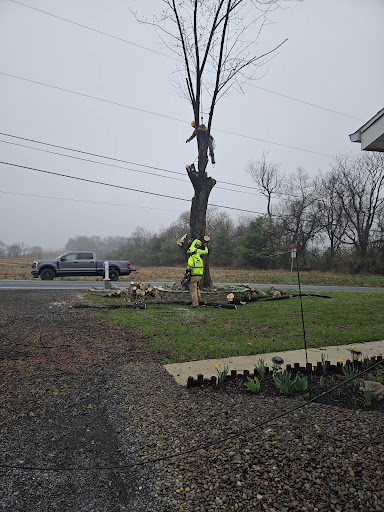
We hear from a lot of commercial clients who had a tree removed by another company and were left with the stump, a pile of grindings, and a hole in the ground as someone else's problem. Arbor Max scopes stump grinding and restoration into the original tree removal estimate whenever possible, so a property manager gets one clean result instead of a job that stops short. If you already had removal work done elsewhere and are left with stumps to clear now, we grind and restore those sites on their own as a standalone project.
Access matters as much as the grinding itself on a commercial site. Loading docks, parking structures, retaining walls, and underground utility runs all narrow the path a machine can safely take, and a crew that has not scouted the property first can damage a curb, a sprinkler line, or a section of pavement while trying to reach a stump. We walk the access route before equipment ever arrives, flag anything that needs protection, and plan the approach so the grinder can do its job without putting the rest of the property at risk.

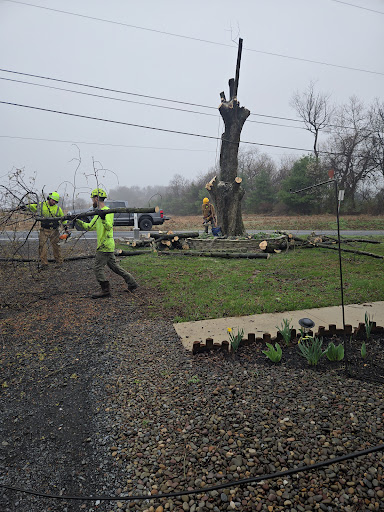
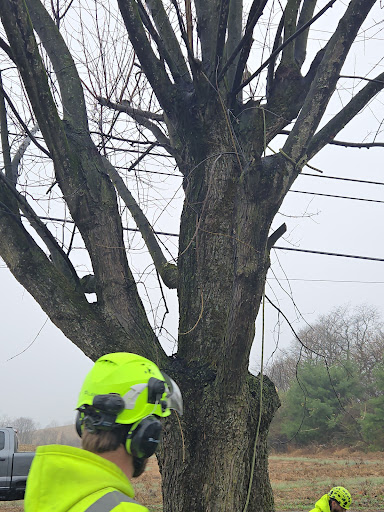
Stump grinding below grade ahead of site restoration in Wyomissing.
Site Restoration for Property Managers, HOAs, and Public Agencies
Every commercial property has a different plan for the ground once a stump is gone. A retail plaza might need the area seeded and mowed within a lease turnover deadline. An HOA board might want a common area restored before residents notice bare dirt through the spring. A school district might need a field section leveled before an athletic season starts. A general contractor might need the ground graded to spec before a paving crew arrives the following week. We ask what the site is being restored for before we start, so the grade, the fill, and the finish match what happens next rather than a generic patch job.
Site restoration often follows directly from a broader land clearing or brush clearing project, and pairs naturally with an earlier arborist consultation that identified which trees needed to come down in the first place. Keeping that documentation and the follow up restoration work with the same crew means nothing gets lost between the initial evaluation and the finished site, and a property manager or board has one point of contact for the entire project instead of several vendors to coordinate.
What a Restoration Estimate Covers
Every estimate spells out the number of stumps, the grinding depth, whether deeper root removal is needed for construction or planting, the backfill and grading scope, and what finish material, if any, is included. We put this in writing before work starts so a property manager can plan a budget or bring a real number to a board meeting instead of guessing at what "restoration" will actually cost. For reference material on healthy turf establishment and soil preparation after tree work, the Penn State Extension tree care program is a useful resource for facilities staff planning the next phase of a site.
Leftover stumps and disturbed ground do not resolve themselves, and an unfinished site can hold up a landscaping schedule, a lease turnover, or a construction timeline longer than it should. Berks County properties also deal with seasonal timing: grinding and restoration completed in fall can leave a site ready for spring planting, while a job scheduled ahead of a summer lease turnover needs turf established well before tenants arrive, so we plan the work around the calendar your property is actually working against rather than a generic schedule.